Bhutan Travel Blog
Five Rare and Endangered Species Found in Bhutan
Bhutan, the Himalayan kingdom celebrated for its pristine landscapes and conservation-focused policies, is home to an extraordinary diversity of wildlife. With more than 70% of its land covered by forests and extensive areas protected through national parks, wildlife sanctuaries, and biological corridors, Bhutan provides important habitats for some of the world's rarest species.
From elusive snow leopards in the high Himalayas to golden langurs in the subtropical forests, here are five remarkable rare and endangered species found in Bhutan.
1. Snow Leopard (Panthera uncia)
Mysterious and elusive, the snow leopard inhabits the high alpine regions of Bhutan, including areas within Jigme Dorji National Park and Wangchuck Centennial National Park.
Adapted to rugged mountain terrain, these solitary cats are exceptionally difficult to spot in the wild. Bhutan is believed to support a significant population of snow leopards, although exact numbers remain difficult to determine because of their remote habitat and elusive nature.
The species is classified as Vulnerable on the IUCN Red List and faces threats including climate change, declining prey populations, habitat pressures, and human-wildlife conflict.
Bhutan's protected areas, conservation programs, and community participation play an important role in protecting this magnificent Himalayan predator.
2. Red Panda (Ailurus fulgens)
With its reddish coat, masked face, and long bushy tail, the red panda is one of Bhutan's most charming and elusive mammals. Sometimes called the “fire fox,” it inhabits temperate forests across the Himalayan region.
In Bhutan, red pandas are found in forested areas of the country, including habitats around Merak and Sakteng, where they depend heavily on bamboo and mature forests.
The species is classified as Endangered by the IUCN and faces threats from habitat loss and fragmentation, human disturbance, poaching, and the effects of climate change.
Bhutan's extensive forests and network of protected areas and biological corridors provide important habitats and movement routes for this remarkable species.
3. Royal Bengal Tiger (Panthera tigris tigris)
Bhutan is remarkable for its Royal Bengal tigers, which have been recorded across an unusually wide range of elevations—from subtropical forests in the south to high mountain landscapes.
Camera-trap surveys have provided evidence of tigers living at elevations of more than 4,000 meters, demonstrating the extraordinary ecological range of Bhutan's landscapes.
The tiger is classified as Endangered and faces threats including habitat fragmentation, poaching, declining prey populations, and human-wildlife conflict.
Bhutan's approach to tiger conservation combines protected areas, biological corridors, community participation, research, and cooperation with neighboring countries.
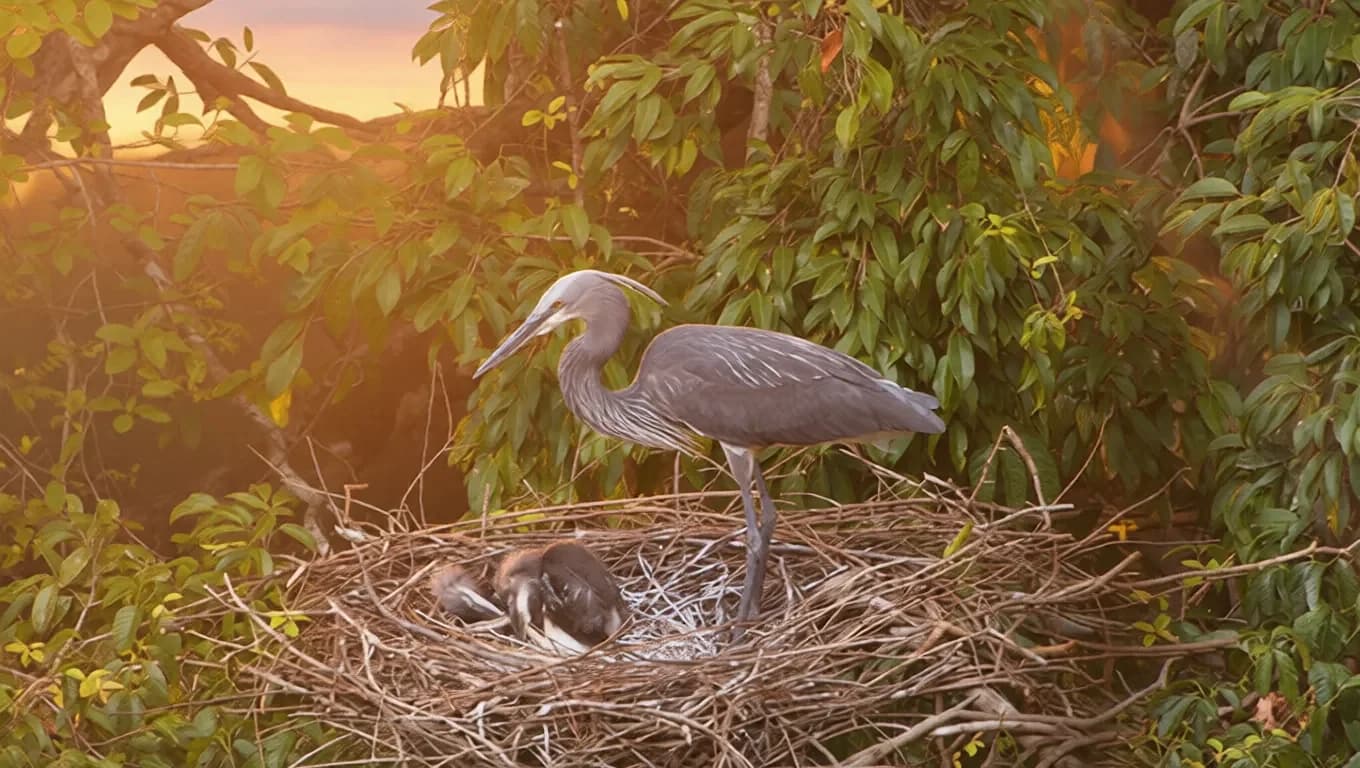
4. White-bellied Heron (Ardea insignis)
The white-bellied heron is one of the rarest birds in the world and one of Bhutan's most important conservation species.
Classified as Critically Endangered, this large and elusive bird depends on clean rivers, undisturbed riverbanks, and suitable nesting and feeding habitats.
Bhutan has historically supported a significant proportion of the world's remaining population, particularly along river systems such as the Punatsangchhu and Mangdechhu.
The species faces serious threats from habitat disturbance, river development, infrastructure projects, and changes to its feeding and breeding environment.
Conservation efforts in Bhutan focus on protecting important habitats, monitoring populations, and reducing human disturbance around nesting and feeding areas.
5. Golden Langur (Trachypithecus geei)
The golden langur is one of the world's most striking primates, instantly recognizable by its long, silky golden coat. It is found naturally in Bhutan and neighboring parts of northeastern India.
In Bhutan, the species inhabits subtropical forests, particularly in areas of southern Bhutan. Its survival depends heavily on maintaining connected forest habitats.
The golden langur faces threats from habitat degradation and fragmentation, making Bhutan's commitment to forest conservation and ecological connectivity particularly important.
Protected forests and biological corridors help maintain connections between populations and provide the habitat this remarkable primate needs to survive.
Protecting Bhutan's Wildlife
These five species represent only a small part of Bhutan's extraordinary biodiversity. From the high Himalayan ranges inhabited by snow leopards to the subtropical forests where golden langurs roam, Bhutan's varied landscapes support an exceptional range of wildlife.
Protecting these species requires more than national parks alone. Forest conservation, biological corridors, community participation, scientific research, and responsible tourism all play important roles in protecting Bhutan's natural heritage.
For travelers, encountering Bhutan's wildlife is a reminder that conservation is not simply about protecting individual species—it is about preserving the forests, mountains, rivers, and ecosystems they depend upon.
Bhutan's wild places remain one of its greatest treasures, and protecting them ensures that future generations can continue to experience the extraordinary biodiversity of the Himalayan kingdom.
Keep Reading