Bhutan Travel Blog
Fascinating Facts About Bhutan: A Kingdom Like No Other
Bhutan is a small Himalayan kingdom, but its unique culture, traditions, environment, and approach to development have made it unlike almost anywhere else in the world. From Gross National Happiness and sacred mountains to fiery chilies and a remarkable national animal, here are 10 fascinating facts about Bhutan that reveal what makes the country so distinctive.
1. A King Who Voluntarily Led Bhutan Toward Democracy
In 2005, Bhutan's Fourth King, His Majesty Jigme Singye Wangchuck, announced his decision to hand over greater political power to the people and prepare the country for democratic governance. Rather than holding onto absolute authority, the monarch supported the transition to constitutional democracy.
In 2008, Bhutan held its first parliamentary elections, marking a historic new chapter in the country's political development. Bhutan's transition to democracy was notable because it was initiated largely from within the monarchy rather than through political upheaval.
2. Bhutan Prioritizes Happiness Alongside Economic Development
While many countries measure progress primarily through economic indicators such as GDP, Bhutan is internationally known for its philosophy of Gross National Happiness (GNH).
Introduced under the leadership of the Fourth King, GNH emphasizes that development should consider more than material wealth. It incorporates four pillars and nine domains, covering areas such as good governance, environmental conservation, cultural preservation, health, education, and community well-being.
For Bhutan, development is intended to balance economic progress with social, cultural, spiritual, and environmental values.
3. Traditional Dress Is Part of Everyday Bhutanese Life
Bhutan's national dress is an important part of the country's cultural identity. Men traditionally wear the gho, while women wear the kira.
Traditional dress is required in schools, government offices, and many formal settings, while appropriate national attire is also expected when visiting important religious and cultural sites.
Many Bhutanese garments are beautifully woven and decorated, reflecting the country's long tradition of textile craftsmanship.
4. Bhutan Began Opening to the Modern World in the 1960s
For much of its history, Bhutan remained relatively isolated from the outside world. Modern infrastructure began developing rapidly in the 1960s, particularly under the reign of the Third King, His Majesty Jigme Dorji Wangchuck.
Roads, schools, hospitals, telecommunications, and other modern services gradually expanded across the country. India played an important role in supporting Bhutan's early development and infrastructure projects.
This period marked a major transformation while Bhutan continued to emphasize the preservation of its unique culture and identity.
5. Mountaineering Is Prohibited in Bhutan
Bhutan is home to some of the highest mountains in the Himalayas, yet mountaineering is prohibited.
The policy reflects Bhutan's respect for sacred mountain landscapes as well as its commitment to environmental protection. Gangkhar Puensum, rising to around 7,570 meters, remains famous as the world's highest unclimbed mountain.
Rather than treating its highest peaks as targets for conquest, Bhutan has chosen to leave them largely untouched—a reflection of the country's distinctive relationship with nature and spirituality.
6. A Capital City Without Traffic Lights
Thimphu, Bhutan's capital, is famous for having no conventional traffic-light intersections.
Traffic at busy junctions is traditionally managed by traffic police, who direct vehicles by hand. Although traffic lights have been introduced in limited contexts over the years, Thimphu remains well known for its distinctive approach to traffic management.
For visitors, seeing traffic police calmly directing vehicles at busy intersections is one of the capital's more unusual experiences.
7. Television and the Internet Arrived Only in 1999
Bhutan introduced television and the internet in 1999, relatively late compared with most countries.
Before television became available, Bhutanese communities relied heavily on traditional forms of communication, radio, newspapers, letters, and word of mouth.
The arrival of television and the internet marked a significant turning point, connecting Bhutan more closely with the outside world while raising new questions about how modern influences could be balanced with traditional culture.
8. Bhutan Is Known for Its Carbon-Negative Status
Bhutan is internationally recognized for its strong environmental policies and carbon-negative status. Its extensive forests, hydropower resources, and relatively low-carbon economy contribute to the country absorbing more carbon dioxide than it emits.
Environmental conservation is also protected by Bhutan's Constitution, which requires the country to maintain at least 60% forest cover for all time.
This commitment to conservation is one reason Bhutan is frequently regarded as a global example of environmentally conscious development.
9. The Takin: Bhutan's Unusual National Animal
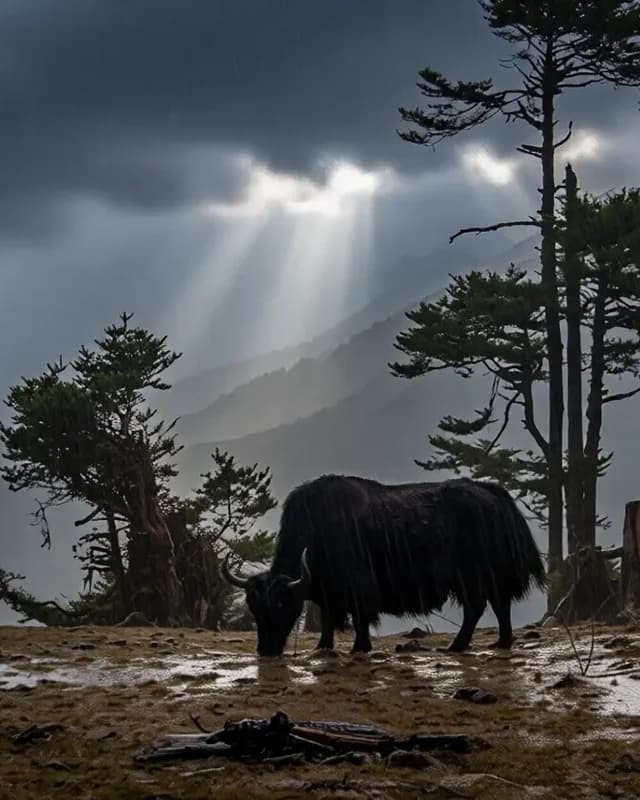
Bhutan's national animal, the takin, is one of the strangest-looking mammals in the Himalayas. With its large body, short legs, and distinctive head, it has often been described as looking like a cross between a goat and a cow.
Takins inhabit high-altitude forests and alpine regions and can be found in several parts of Bhutan.
According to Bhutanese legend, the animal was created by the Drukpa Kunley, better known as the Divine Madman, using the head of a goat and the body of a cow. Today, the takin remains an important symbol of Bhutan's distinctive natural and cultural heritage.
10. Bhutanese Love Chilies
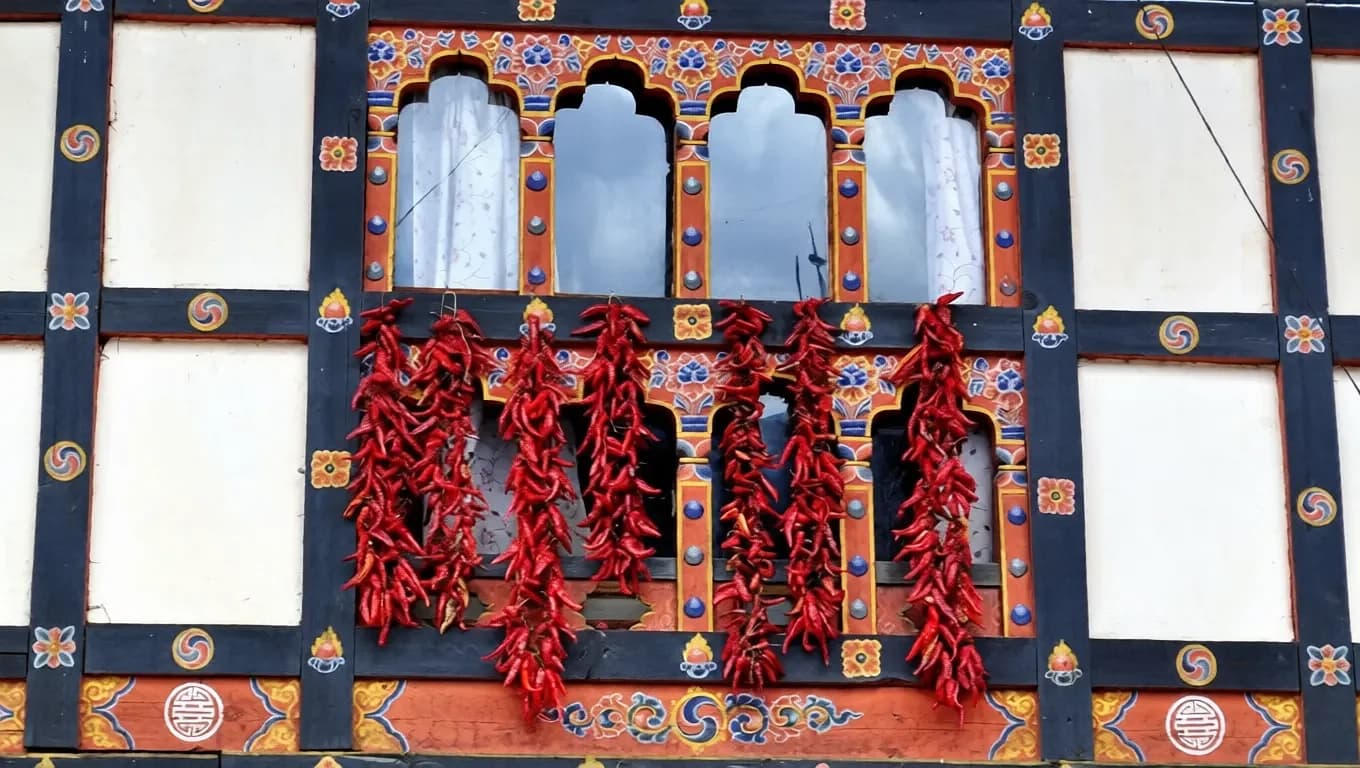
In Bhutan, chilies—known locally as ema—are much more than a seasoning. They are an essential part of Bhutanese cuisine.
The country's famous dish Ema Datshi, made with chilies and cheese, is a staple of Bhutanese meals. Chilies can be eaten fresh, dried, cooked, or incorporated into a variety of dishes.
For many visitors, Bhutanese cuisine can be surprisingly spicy. But for Bhutanese people, chilies are not simply about heat—they are an essential part of the country's culinary identity.
Bhutan: A Kingdom Like No Other
From its transition to democracy and philosophy of Gross National Happiness to its sacred mountains, extraordinary biodiversity, traditional dress, and love of chilies, Bhutan offers a remarkable combination of ancient traditions and modern development.
These fascinating facts only scratch the surface. To truly understand Bhutan, you need to experience its landscapes, meet its people, explore its villages, and discover the traditions that continue to shape everyday life.
That is what makes Bhutan more than a destination—it is a place with a story waiting to be experienced.